Common Cat Health Issues New Pet Parents Should Know About
Just adopted a cat? Here are the most common feline health issues to look out for — plus what to do when something seems off.
Just adopted a cat? Here are the most common feline health issues to look out for — plus what to do when something seems off.
by Dr. Maria Zayas, DVM, | June 2, 2026

Evgeniia Siiankovskaia / Stocksy
When you welcome a new cat into your home, no matter their age, they need time to adjust. How much time? That can depend on many things, but a good rule of thumb is to give them at least two to three weeks to present any potential health concerns and, if they’re feeling well, become comfortable enough to settle into their real personalities.
Keeping an eye out for subtle changes during this period is a great way to catch health problems early, but it can be hard to know what’s different when your cat is new to you and your space. Here are some of the most common health concerns you might see in a new cat.

BONNINSTUDIO / Stocksy
Cats going through a stressful change will be prone to more vomiting than usual. While stress alone can trigger an upset tummy, changing foods and treats when they change households is a common culprit as well.
Normal vomiting in cats can include:
Hairballs a couple of times a month
Hairballs up to once weekly, potentially in long-haired cats
Regurgitating dry food immediately after eating it too quickly
One episode of vomiting within a day or two of moving into your home
One to two total episodes of vomiting within the first week in a new home
Remember that even if a cat’s vomiting pattern can be normal, that doesn’t mean it is. Chronic hairballs or vomiting of food can also be signs of underlying health issues. If this is happening more than a couple of times a month, talk to a veterinarian about it. It’s OK if it happens a couple of extra times during a stressful period (like moving into a new home). But if it keeps occurring after the first couple of days, or is happening a lot in those first days, you might still have a problem and should have them checked out.
What a cat vomits also lets you know how concerned you should be. Below are a few of the most common things cats tend to vomit.
Hairballs are not particularly concerning unless a cat struggles to bring them up, has more than one a day, has hairballs multiple days in a row, or generally has them more than once weekly to every other week. Still, what’s normal frequently depends on coat length (more hair means more hairballs).
Bringing up undigested food, particularly if it’s dry food, can happen when a cat eats too quickly. Offering more frequent, smaller meals, slowing down the eating with slow-feeder bowls, or offering wet food instead can help with this.
Vomiting digested food, however, is a sign of an upset stomach. If that happens more than once, you should talk to a vet immediately.
Bile is a yellowish-to-clear digestive fluid that helps break down food. Cats who vomit bile aren’t feeling well, and if this happens more than once, they need to see a vet.
If a cat only vomits fluid, that might also be water or some combination of water and bile tinged with color from a little food still being in the stomach. If a cat vomits fluid only in general — or is nauseous, or not feeling good — they should see a vet if they vomit more than once.
If the fluid is red (like there might be blood in it), this is a serious sign. They should be taken to an emergency room as soon as possible.
If anything else is in the vomit besides food, fluid, or hair, you might have a problem. Whether you find dirt, grass, parts of toys, hair ties, string, or plastic — your cat is probably swallowing things they shouldn’t, which can cause an obstruction in their intestines. This can be a life-threatening condition.
If your new cat vomits anything like this, seek veterinary care immediately if they seem “off” afterwards, vomit again, or if what they bring up indicates there may still be a foreign object inside them.

Lightspruch / Adobe Stock
One of the most common problems a cat will face while adjusting to their new home is issues with their litter box. Cats can be picky about their litter: If the litter is different from what they’re used to, they may refuse to use it. Other problems may include not liking the shape or entry of their new litter box, the location of their litter box, or the cleanliness or smell of it.
To avoid these issues, provide them with more than one litter box, with at least one being very large and featuring an easy-to-use shape (wide and long, with low sides). You can even try providing them with different boxes with different litter options.
Signs of a problem that requires a vet:
Continuing to avoid the litter box after the first couple of days
Straining to urinate
Squatting in the litter box, but not having anything come out
Vocalizing in or while approaching the litter box
Urine that’s red or red-tinged
If you notice anything on this list, then your cat needs to see a vet. If they squat in the litter box but don’t pass anything, especially if they’re male, this is an emergency, and you should take them to a vet immediately.
In addition to setting up your cat for success with the right litter box and litter setup, you can support anxiety relief by providing them with a quiet, safe area to relax where people, children, and other pets won’t disturb them. You may also utilize pheromone diffusers and sprays that aim to lower stress levels, try a white-noise machine, and leave your cat things they can do alone (such as puzzle toys or toys they play with solo), so they have something to do and explore while adjusting.

Jozef Polc / Alamy Stock Photo
Fleas are a common ecto-parasite, or the type of parasite that affects the outside of the body rather than the inside. Mites, lice, ringworm, and internal parasites such as worms and giardia are all possible problems that a cat might have while transitioning from another location to your home.
Signs of parasites:
Scratching
Hair loss
Dark, grainy debris on the skin or within the hair coat
Diarrhea
Visible bugs or worms
Vomiting
Any new cat you welcome into your home should see a vet within a week of coming home, and it’s usually best to maintain a quarantine protocol for the first two weeks as well. This entails washing yourself after handling them, changing what you wear after you’re with them, and not letting them have access to the entire home. Some parasites can take time to present themselves, so it’s better to be safe than sorry.
Once diagnosed, a vet can recommend the proper treatment to clear any parasites your cat does have.
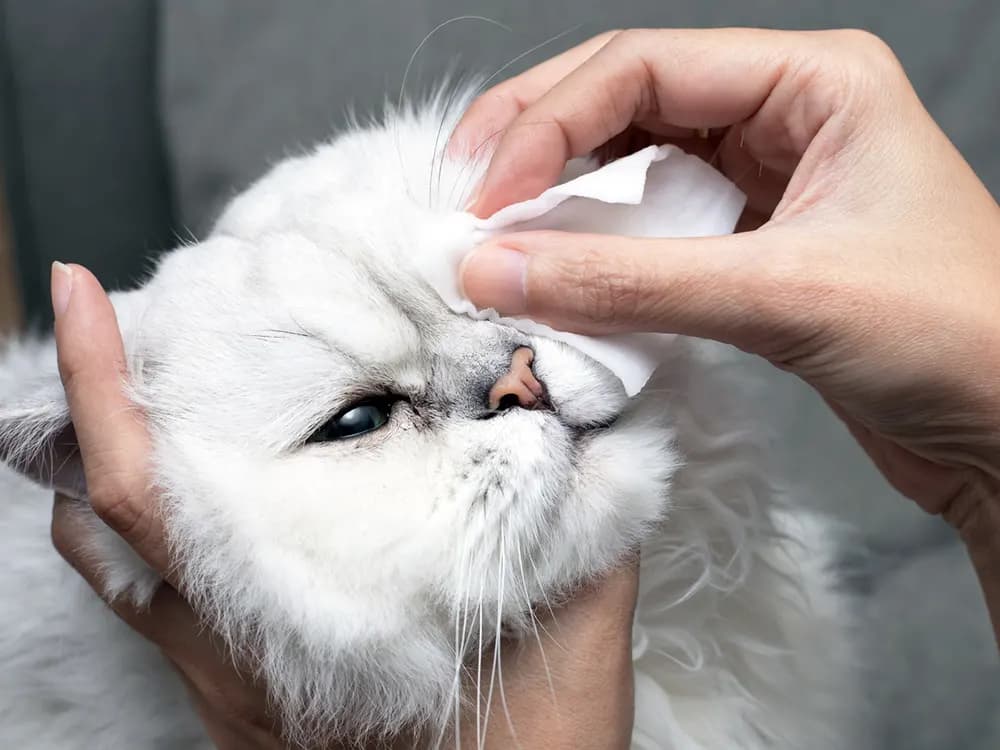
catinsyrup / iStock
An estimated 90 percent or more of house cats have a virus that lives in their nose, which can go mostly undetected unless it flares up and causes upper respiratory-type symptoms.
Examples of upper respiratory infection symptoms include:
Sneezing
Coughing
Nasal discharge
Squinting one or both eyes
Eye discharge
Swollen or red conjunctiva (usually pink tissue under the eyelid)
Low or lack of appetite
Drooling
The most common cause of a flare-up is stress. Because most cats have a virus ready to cause upper respiratory symptoms already living inside of them, time in a shelter or rescue — and moving into their new home — are all common times when cats will look like they have a kitty cold.
This is usually not common or severe. But if your cat starts showing the signs listed above, talk to a vet about how to best support your cat. Most of the time, these symptoms are caused by one or more viruses that don’t always have a great, direct treatment option. Luckily, most infections will resolve on their own with the right supportive care. Kittens and senior cats are most susceptible to severe symptoms.

magui RF / Adobe Stock
Stress and sudden diet changes are the most common causes of diarrhea in a cat you’re just bringing home for the first time, with parasites and other health conditions being the next most common causes.
Supporting a low-stress environment for your cat when they are adjusting to your home, and feeding them the same food they were eating before, are the best ways to avoid diarrhea when your cat first moves in with you. When you want to change their diet, slowly transition them from the old food to the new food over two weeks to avoid diarrhea, vomiting, and general tummy upset.
Taking them to a vet within a week or so of adoption can help rule out other health conditions and parasites.
It’s really helpful to plan for a vet visit the first week after bringing your cat home — to establish a baseline as well as catch things early. Certain problems and symptoms commonly occur in new cats, such as those listed above, but they could also be part of a larger health picture. Because you don’t know your cat’s health history in detail prior to bringing them home, a vet is best equipped to learn what you should be concerned about.
An episode or two of vomiting can be normal the first week you bring our newly adopted cat home. But when in doubt, have them checked out by a vet.
A veterinarian can take a urine sample from your cat to see if they have a urinary tract infection.
Any time a cat has been in a space with lots of other animals, there is a risk of them having fleas and other parasites. Sometimes it takes time for the symptoms to show, up to a couple of weeks after they leave a shelter, for example.
This is usually because they have an upper respiratory infection that causes inflammation in their nose. These symptoms are triggered during stressful periods in a cat’s life, and a vet can confirm if this is the case for your cat.
Each cat is different, but they need at least two to three weeks to adjust — and often several months, or even up to a year. If they are older or have underlying health conditions, it can take them longer to adjust.
If you’re able, taking them to a vet within a few days of adoption is best. A goal of doing so within at least the first month is great when you can’t take them that first week.
Yes, stress can cause vomiting, diarrhea, upper respiratory symptoms, litter box woes, and more.
Brooks, Wendy. “Inappropriate Elimination (House-Soiling) in Cats.” Veterinary Information Network, Veterinary Partner, 24 Feb. 2024, veterinarypartner.vin.com/default.aspx?pid=19239&id=4951508.
Calder, Christine. “You and Your Newly Adopted Pet.” Veterinary Information Network, Veterinary Partner, 1 Jan. 2021, veterinarypartner.vin.com/default.aspx?pid=19239&id=10762586.
“Fleas: Know Your Enemy.” Veterinary Information Network, Veterinary Partner, 20 Dec. 2025, veterinarypartner.vin.com/default.aspx?pid=19239&id=7955321.
“Upper Respiratory Infection in Cats.” Veterinary Information Network, Veterinary Partner, 5 Jan. 2025, veterinarypartner.vin.com/default.aspx?pid=19239&id=4951489.

Dr. Maria Zayas attended Ross University School of Veterinary Medicine where she completed her veterinary degree in addition to participating in and presenting research related to aquatic animal medicine. She spent her first year as a doctor working with a low cost spay/neuter and general practice clinic before returning to her home state of New York and entering the world of housecall veterinary medicine. Falling in love with this area of medicine, she launched her own housecall veterinary practice in addition to writing pet health articles. She loves all things related to water and continues to travel and explore with her three dogs and one cat, all of whom also love to swim.
Pet Wellness
Pet Wellness
Pet Wellness


Pet Wellness
See how they should be progressing. This weight chart can help.
Nutrition
Sometimes, they actually do need to eat.

Pet Wellness
Your cat cannot live forever. But there are several factors that can contribute to them living a long, healthy life.
Pet Wellness
It sounds like a daunting task, but here are some helpful steps to take.

Breed Info
No, all black cats are not the same.