Kitten Weight Chart: Track Your Cat and Kitten’s Growth
See how they should be progressing. This weight chart can help.
See how they should be progressing. This weight chart can help.
by Dr. Maria Zayas, DVM, | June 25, 2026
CANDID =X= / Stocksy
Healthy kittens grow rapidly in the first few weeks of life and continue to gain weight consistently each day. It is a good idea to keep track of your kitten’s weight over time to track their growth. While individuals will vary, a helpful guideline to keep in mind is that most healthy kittens should weigh about one pound per month of age, up to around four months old.
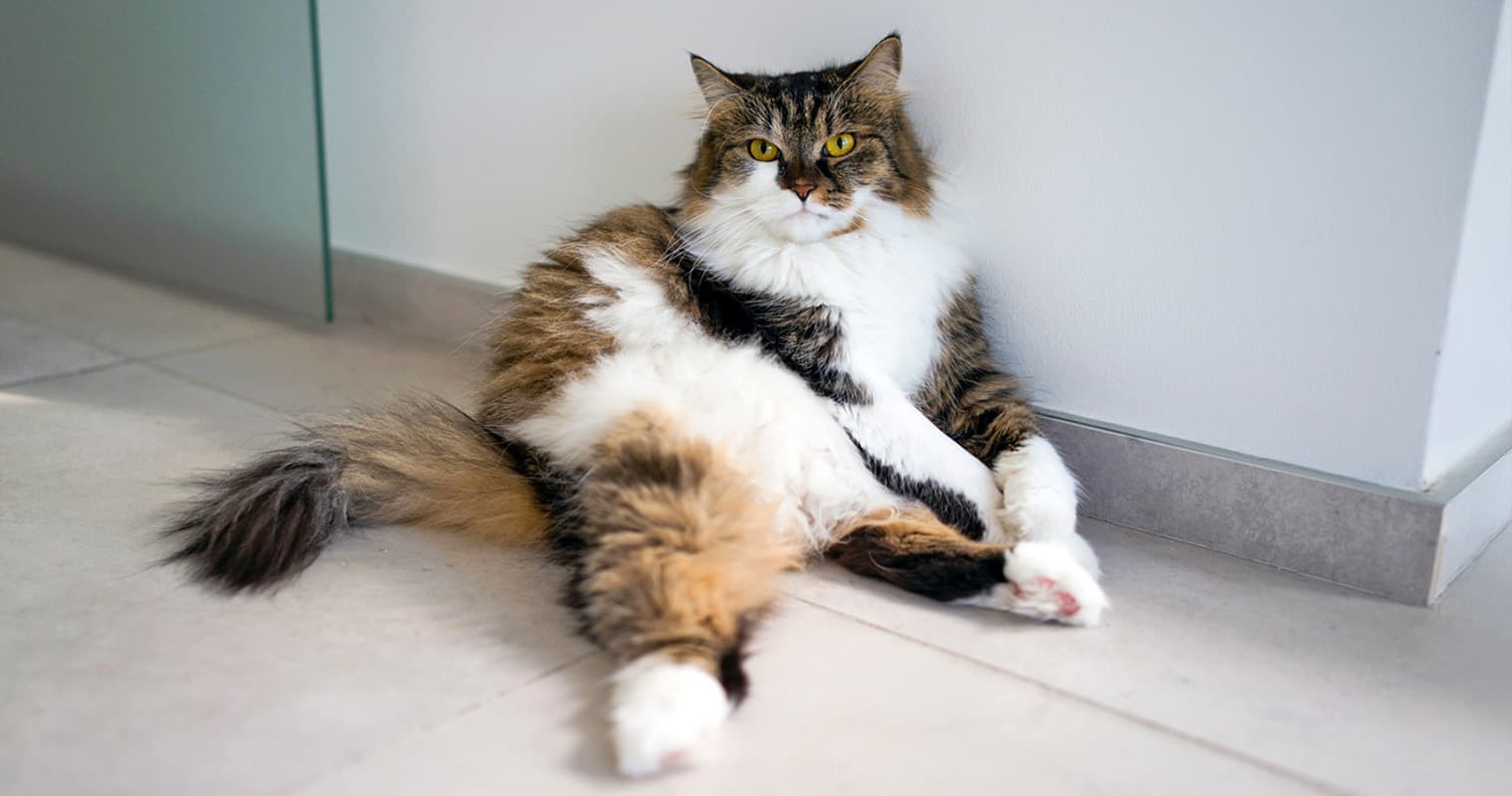
By some estimates, more than half of domestic cats are overweight. We see them taking over social media, getting catchphrases, and inspiring people and pets when they embark on a weight-loss journey. As adorable as round, fluffy cats can be, the excess weight also comes with health risks.
If most pet cats are overweight, how can a cat parent tell if their cat is normal? Believe it or not, cats are supposed to have a waist that you can see from both the side and above. You should be able to feel their ribs if you go looking, and while a bit of loose skin around the belly is normal, those skin folds being full of fat tissue is not.
If you want to avoid weight issues with your cat that lead to difficulty grooming and predisposition to diseases such as diabetes, read on for details about what a healthy cat (and kitten) should weigh.
Vadym / AdobeStock
The most common cat types in the US — the domestic short-, medium-, and longhairs — are in fact, mixed breeds. Due to this, there is a large variance in what is considered a healthy weight for a cat, even within the same litter.
Generally, a healthy cat’s weight can range from as low as eight pounds to as high as 15 pounds, with an average healthy adult cat weighing about 10 to 12 pounds. Some breeds may trend smaller, such as dwarf breeds like Munchkins, while others may trend larger, like Maine Coons. Male cats are generally larger than their female counterparts, but in a mixed-breed cat, weight differences between sexes are less consistent.

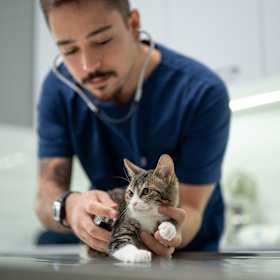
Preparing for a kitten’s first vet visit. Learn about what you can expect from a vet visit and what you should do to ensure it goes smoothly.
For most pet cats, you expect them to maintain their healthy adult weight from about one to 12 years of age. Before and after that, the healthy percentage of body fat they can carry drops. If weight varies so widely by age, sex, and breed, how can you tell if your cat’s weight is healthy? The best way to do this is to find their body condition score.
A cat’s body condition score (BCS) is a five-point or nine-point scale that a veterinarian uses to assess how much fat your cat is carrying and where they carry it. It’s possible to start practicing using a BCS chart with your cat, but for an accurate assessment, be sure to see a veterinarian.

Deagreez / iStock
These milestones help you know if their growth is on track and even how old they are. “Due to the fact that kittens tend to have predictable, linear growth over time, their weight can be a useful way to mark important milestones and keep tabs on their health,” Dr. Amy Fox, DVM, says. “Kittens that are not consistently gaining weight should be seen by a vet as they may have underlying health issues that are preventing them from growing.”
Generally, here is what you should know about average kitten weights, based mostly on domestic shorthairs.
Birth: Kittens weigh about two to four ounces at birth.
Two weeks: A kitten’s weight will double to quadruple in the first two weeks of life.
One to four months: Once they’re a month old, a kitten’s weight in pounds matches their age in months until they’re about four to five months old.
Four to 12 months: After reaching about four to five months of age, a kitten’s growth rate slows a bit, and they roughly double their weight from then until one year of age.
In the first five weeks of life, kittens may gain between seven to 15 grams of body weight per day. Different studies have documented different daily weight gains, so what’s most important is that your kitten is gaining weight each day within this range.
After week five, kittens tend to gain weight more rapidly, with gains of up to 20 grams per day from week five to week 16. Again, keep in mind that it is more important to focus on your individual kitten’s growth chart than to worry about exactly how much they gain per day. As long as they are consistently gaining weight and meeting their milestones, their growth is on track. Some easy kitten math to keep in mind is that kittens typically gain about one pound per month for the first four months of life.
This means a one-month-old kitten should weigh about one pound, and a four-month-old kitten weighs about four pounds. Once they are over four months old, their growth can vary a lot more, so the pound per month guidelines don’t really work. Their growth tends to slow down between six and eight months old, and kittens will keep growing until they are about one year old. For most kittens, weighing more than 10 pounds before they’re one year old is an indication that they may be overweight.
It’s important to remember that these averages do vary by breed — but you can find the average milestone weights of a cat for most specific breeds as well. Being familiar with the growth rate patterns for your kitten can be very helpful in spotting early signs of any issues. If their growth seems persistently slower than it should be, let your veterinarian know so they can screen for congenital health defects, parasites, and other potential problems.
Adult cat weights vary significantly by breed. The best way to assess weight concerns in an adult cat is to track their weight, noting gains and losses, in addition to learning how to assess their BCS.
Pairing your cat’s weight with their BCS is far more useful than comparing their weight to the average adult cat weight, even if they are purebred. Most cats will continue to gain a little weight between their first and second birthdays — typically about one to two pounds — but then should plateau until they’re about 10, when their weight begins to drop as their muscle mass decreases. Even as their weight changes, if you track their BCS, this will help you know what is too much weight gain or loss.
Here is a five-point body condition chart.
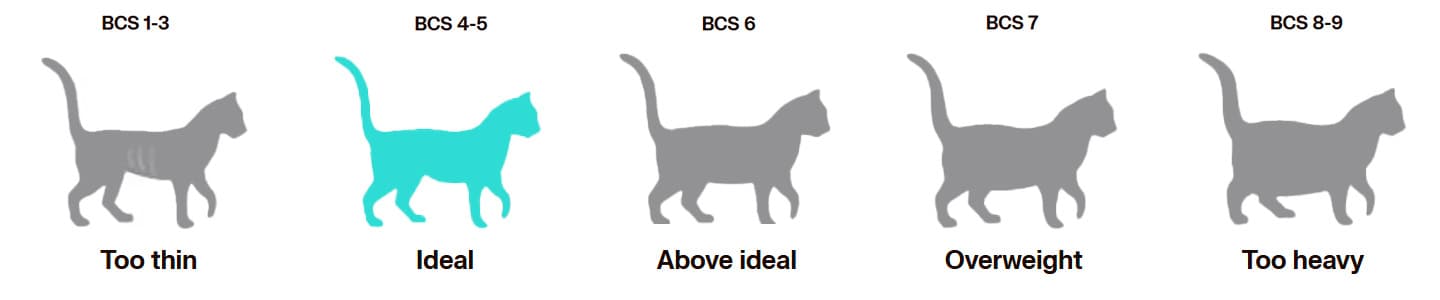
The ideal BCS for a cat is highlighted. You can see their waist from above and from the side. You can tell where their rib cage is — but you can’t see each rib, and you can feel their bones (such as ribs and hips) if you examine them.
An underweight cat will have ribs, hips, and spinal bones that can all be seen from a distance. They have little muscle mass with a thin, tucked abdomen and skinny back legs.
An overweight cat appears round when viewed from above and the sides. The end of the ribcage cannot be seen. There is no visible waist. And they may have a characteristic stiff, stomping gait.
Due to many cats having a primordial pouch (or, flaps of skin hanging down from the front to the back of the belly), the most likely difference you will encounter between your cat and a BCS chart is no visible waist when viewing your cat from the side. If they have a waist from above but not from the side, be sure to feel for loose flaps of skin which may have fat pads inside, and tuck those up against their abdomen to better assess where their waist is.
Male cats typically weigh more than their female counterparts. Here are some examples of average male and female cat weights across common breeds.
Male | Female |
|---|---|
13.5 to 18 pounds | 11 to 13 pounds |
Male | Female |
|---|---|
10.5 to 11.5 pounds | 9 to 11 pounds |
Male | Female |
|---|---|
9 to 11 pounds | 7 to 8 pounds |
Male | Female |
|---|---|
9 to 10 pounds | 6.5 to 7.5 pounds |
“Most veterinarians use a body-condition score to assess a cat’s overall weight and body condition along with other forms of evaluation. This is based on physical exam findings, such as how prominent certain bony landmarks are including their ribs, hip bones, and spine,” Dr. Fox says. “Ideally these bones should not be visible when looking at a cat but can be felt when handling them. A cat who lacks muscle and fat will have more visible bony landmarks.”
If your cat shows the following signs, you should take them to the vet to assess for health problems. Make sure they’re eating the recommended amount of food formulated for their life stage, and not vomiting or regurgitating their food.
Visible spine, hips, and individual rib bones
Very little musculature with skinny limbs
Narrow waist, visible from above and the side
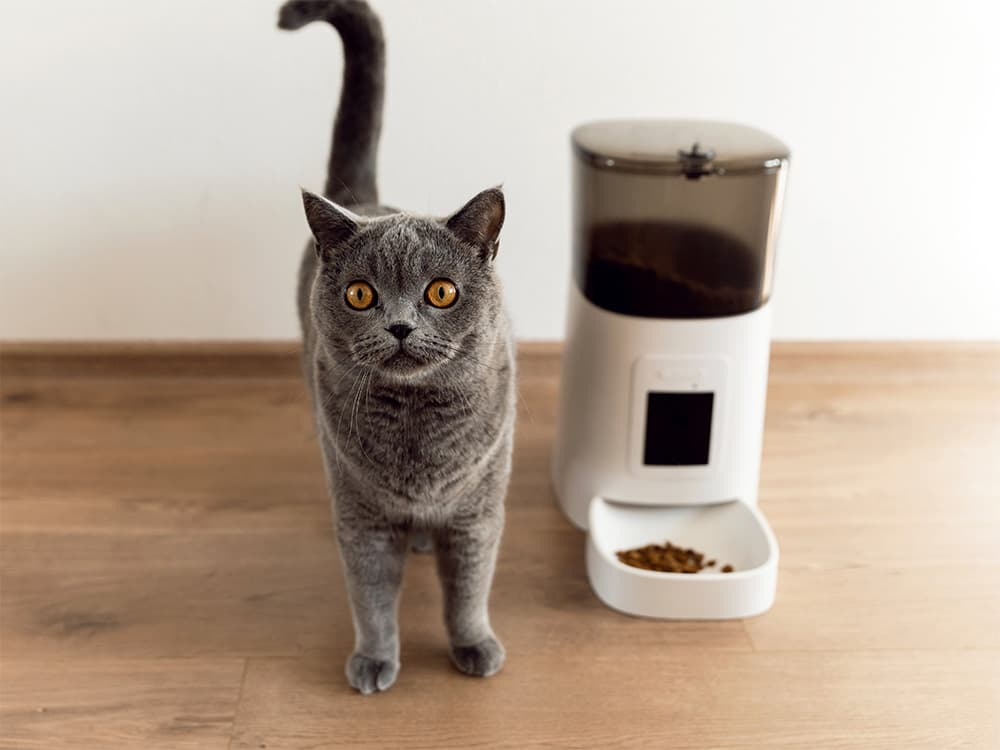
Most pet cats are overweight, so if you find that your cat is overweight or obese, know that you’re in good company. The most common culprit for an overweight cat is free access to food at any time of day (aka free-feeding). Free-feeding dry food, in particular, to a cat will eventually lead to them being overweight.
Here are some tell-tale signs your cat is overweight:
Round body shape, with no visible waist from above or the side
Thick, stiff limbs with a heavy gait
When adjusting your cat’s diet, consider how canned wet diets are less calorie-dense than dry food. So, encouraging your cat to eat wet food can lead to weight loss. Follow the feeding instructions provided with any diet to know how much to feed. If this doesn’t lead to weight loss, check in with your vet, who can screen your cat for health concerns and recommend a safe calorie-restricted diet.
There are a number of factors that influence a kitten’s growth, development, and weight. Below, Dr. Fox shares a few factors:
What a kitten eats, or doesn’t eat, has a big impact on their growth. The most extreme examples are stray kittens who may not be eating consistently at all, or may be scavenging for scraps and are likely to be underweight as a result of poor overall nutrition. More subtle nutritional differences come into play depending on what kind of food a kitten is eating and how often they are eating.
As carnivores, their nutritional needs are very specific, too. If they are not eating a complete-and-balanced cat food, they can be at risk for nutritional deficiencies that will affect their growth.
Kittens are vulnerable to many different health issues which can affect their growth and weight gain. Some are conditions they are born with, such as cleft palates, which make nursing difficult, or developmental disorders like liver shunts, dwarfism, or hypothyroidism. Other health issues are acquired, such as infections like intestinal parasites and other infectious diseases which can affect their appetite, how they absorb nutrients, and their overall health. Many of these conditions will be easily diagnosed by a veterinarian, and screenings are an important part of all kitten exams. Common infections are also treated preventatively with vaccines and dewormings to avoid serious complications.
External influences can also affect a kitten’s growth. This is most obvious for kittens that are living as strays without consistent access to nutritious food. It can also be an issue in multi-cat households where there is competition between kittens or between kittens and adult cats for food.
Behavioral factors can also affect a kitten’s growth if they are avoiding their food bowls due to specific fears or simply because they are still adjusting to being in a new home.
Genetics also play a role in a kitten’s growth. This is most obvious when studying pure-bred cats who have predictable appearances and sizes based on years of selective breeding to target those genetic traits. There are also genetic disorders like dwarfism that may affect growth, however these are rare.

Chalabala / AdobeStock
Long periods of time at an abnormal weight can negatively impact a cat’s health. Typically, if a cat is underweight and hasn’t been restricted from food, then this is due to a disease or parasite. Some culprits include:
GI parasites (such as worms or giardia)
Hyperthyroidism
Chronic kidney disease (CKD)
Cancer
It is important that an underweight cat sees a vet to screen for health concerns causing this. The sooner they receive treatment, the more likely they can return to a normal weight and avoid secondary health complications.
In contrast, the consequences of obesity in cats can include:
Osteoarthritis (joint pain)
Inability to groom and maintain their hair coat to avoid matting
Heart disease
Cancer
Hepatic lipidosis (fatty liver disease)
Shortened lifespan
It is extremely unusual for a kitten under four months of age to be truly overweight. Kittens are growing rapidly and tend to be very active so in most cases, obesity is not a concern. It may be hard to accurately assess their body condition because they tend to develop big full bellies after eating and/or due to common health problems like intestinal parasites. There may also be variations within the same litter of kittens where some of the kittens are much larger than others.
The average lifespan of obese cats is about 12.5 years.
The average cat weight varies significantly by age, sex, and breed. Generally, the average ideal cat weight can range from eight to 12 pounds.
Kittens go through many different stages in their development, and depending on your kitten’s age, you may need to be more vigilant about tracking their weight. This is especially important in the early weeks right after birth when babies are most vulnerable. You may need to weigh your kitten daily or at least every few days in those early weeks. As your kitten gets bigger and stronger, you can stretch these weight checks out as long as their growth seems to be on track.
It is not possible to pinpoint the exact size your kitten will reach but there are some useful tools to help you predict it, including using a growth chart to plot your kitten’s growth. These charts predict future growth based on data from other cats of similar size. If you have access to your kitten's biological parents you can also use their size as a predictor for how large your kitten will be.
“Cat Size-O-Meter.” UK Pet Food, 28 Sept. 2022, www.ukpetfood.org/resource/cat-size-o-meter.html.
“Feline Foster Care Guide.” ASPCA, www.aspcapro.org/sites/default/files/aspcapro-feline-foster-care-guide.pdf.
Kienzle, Ellen, and Katja Moik. “A Pilot Study of the Body Weight of Pure-Bred Client-Owned Adult Cats.” British Journal of Nutrition, vol. 106, no. S1, 12 Oct. 2011, pp. S113–S115. Cambridge Core, www.cambridge.org/core/journals/british-journal-of-nutrition/article/pilot-study-of-the-body-weight-of-purebred-clientowned-adult-cats/AE1E83F87E2C8921C8D0A38D40C0DC2B.
Montoya, Mathieu, et al. “Life Expectancy Tables for Dogs and Cats Derived from Clinical Data.” Frontiers in Veterinary Science, vol. 10, 21 Feb. 2023, www.frontiersin.org/journals/veterinary-science/articles/10.3389/fvets.2023.1082102/full.
Salt, Carina, et al. “Growth Standard Charts for Monitoring Bodyweight in Intact Domestic Shorthair Kittens from the USA.” PLoS One, vol. 17, no. 11, 21 Nov. 2022, pp. 1–17. PubMed, pmc.ncbi.nlm.nih.gov/articles/PMC9678321/pdf/pone.0277531.pdf.
“How to Keep Your Pets at a Healthy Weight.” Royalcanin.com, 2019, www.royalcanin.com/ae/about-us/news/how-to-keep-pets-at-a-healthy-weight. Accessed 4 June 2025.
Animal Welfare Science Update. www.rspca.org.au/sites/default/files/science-update/ScienceUpdate77_April2022.pdf, https://doi.org/10.1080/10888705.2021.2021409.DiGangi, Brian A, et al. “Assessment of Body Weight for Age Determination in Kittens.” Journal of Feline Medicine and Surgery, vol. 22, no. 4, 15 Apr. 2019, pp. 322–328, https://doi.org/10.1177/1098612x19844846
Dr. Maria Zayas attended Ross University School of Veterinary Medicine where she completed her veterinary degree in addition to participating in and presenting research related to aquatic animal medicine. She spent her first year as a doctor working with a low cost spay/neuter and general practice clinic before returning to her home state of New York and entering the world of housecall veterinary medicine. Falling in love with this area of medicine, she launched her own housecall veterinary practice in addition to writing pet health articles. She loves all things related to water and continues to travel and explore with her three dogs and one cat, all of whom also love to swim.

Breed Info

Adoption Advice

Behavior & Training

Adoption Advice
Bringing home a cat? Here’s what you’ll wish you knew sooner.

Pet Wellness
Skip the stress of a bath. These tips can help you get rid of fleas — no water necessary.

Adoption Advice
From size to security, here’s everything you need to know about selecting the perfect carrier for your kitty.

Adoption Advice
You can give a diabetic cat a long and happy life, just by understanding their special needs.
Adoption Advice
Preparing for a kitten’s first vet visit. Learn about what you can expect from a vet visit and what you should do to ensure it goes smoothly.

Pet Wellness
Regular vet visits are key to keeping your pet healthy. Here’s what happens during a checkup, when to get them, and what to bring.


Rehome
Nobody wants to part with their beloved pet — and you don’t have to. Here are some practical solutions to consider before assuming your cat isn’t working out.

Adoption Advice
Stressed about raising your kitten? This National Kitten Day, we’ve got you covered with everything you need to raise a happy, healthy cat.