8 Warning Signs of Dehydration in Dogs
It can range from fixable to super-serious. Here’s what you need to know.
It can range from fixable to super-serious. Here’s what you need to know.
by Dr. Shelby Neely, DVM, | May 2, 2025
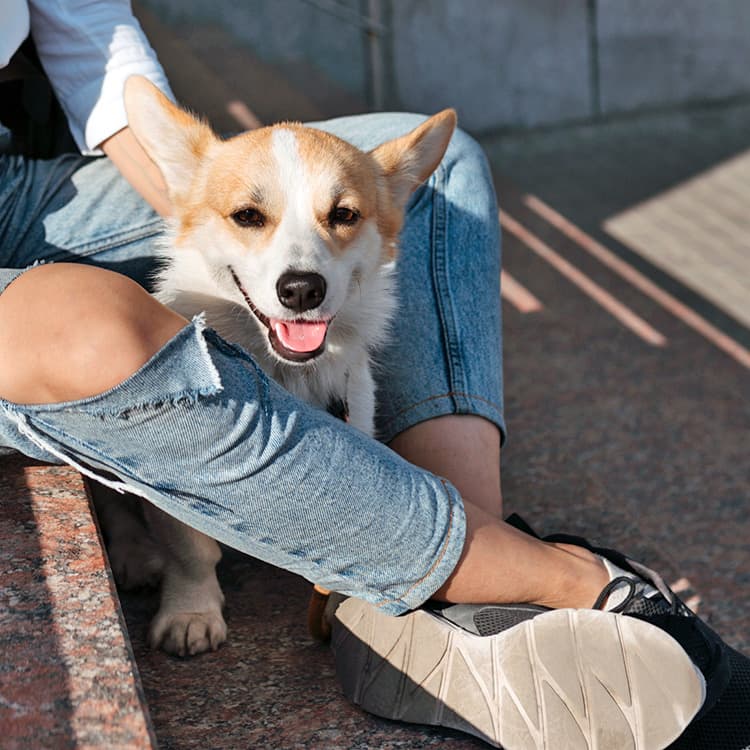
Irina Polonina / Stocksy
We often say we’re dehydrated, especially on a hot day or after too much exercise. Fortunately, we drink water, and then we’re fine. Dogs can also get slightly dehydrated. If there’s a bowl of water, they will drink what they need to, and all is well.
However, dehydration can become a serious condition if, for some reason, we or our dogs don’t drink enough. Dehydration can range from mild to severe, and if left untreated, can even become life-threatening. Understanding this and identifying the symptoms is essential for a pet parent.
What causes dehydration? It occurs when your dog’s body loses more fluid than it takes in. Dehydration can be mild, moderate, or severe. The chart below shows the symptoms and treatment for each of those levels of dehydration for your pup.
Severity of Dehydration in Dogs | Symptoms | What to Do |
|---|---|---|
Mild dehydration | -Dry or slightly sticky gums -Subtle decrease in skin elasticity -Slight increase in thirst -Reduced energy levels | Oral rehydration: Offer fresh water frequently, and encourage drinking. Electrolyte solutions: Use pet-safe electrolyte solutions (i.e., unflavored veterinary-oral-rehydration solutions). Dietary support: Offer wet food, or add water to dry food to increase hydration. Monitor closely: Reassess hydration status over the next few hours.
|
Moderate dehydration | -Dry and tacky gums -Noticeable loss of skin elasticity -Sunken eyes -Increased heart rate -Lethargy | Subcutaneous (SQ) fluids: Administer balanced isotonic fluids (i.e., Lactated Ringer’s Solution or 0.9 percent NaCl) under the skin if the pet is not vomiting and can still absorb fluids properly. Oral hydration: If tolerated, continue oral fluids alongside SQ fluids. Veterinary assessment: If dehydration is not improving or is worsening, seek veterinary care for further intervention.
|
Severe dehydration | -Very dry, pale gums -Skin stays tented when pinched -Sunken, dull eyes -Extreme lethargy or collapse -Rapid breathing -Weak pulse -Shock | Intravenous (IV) fluid therapy: Immediate veterinary intervention is required. IV administration of isotonic crystalloids (i.e., Lactated Ringer’s, Normosol-R, 0.9 percent NaCl) with possible colloid support for shock. Ongoing monitoring: Bloodwork (electrolytes, kidney function) to assess fluid balance and organ function. Hospitalization: This may require 24-hour care with continuous fluid therapy, electrolyte correction, and treatment of underlying causes. |
Water plays an important role for many different functions in your dog’s body. It’s involved in digestion, circulation, and temperature. If your dog doesn’t have enough water to fulfill those functions, they can develop serious conditions — even organ failure, heatstroke, and death. That’s why you must know how to identify the symptoms of dehydration and the treatment needed.
An expert weighs in on when it’s totally fine, and when you should start to worry.
Your dog’s nose and gums play important roles in assessing hydration. The nose and gums are moist if your pup is well-hydrated. If the nose is dry or cracked, and the gums feel sticky or tacky, this may indicate dehydration. This is a reliable test performed by your vet.
Your vet most often does the skin tent test, and you can, too. Gently pinch the loose skin at the back of the neck. When you let go, the tent that was created should spring back to its normal position. This indicates good hydration. If it remains tented or slowly returns to normal, your dog is dehydrated
If your dog’s eyes seem sunken or dull, this can be a sign that the body is losing fluids. The body’s water helps keep the eyes hydrated and lubricated. Sunken eyes indicate dehydration.
If your dog seems sluggish or fatigued, and isn’t interested in activities they often enjoy, your pup may be dehydrated. This happens due to decreased oxygen circulation and the body’s lower blood volume.
If your dog is panting, that’s because they’re trying to cool down. If your dog is dehydrated, their panting will become more intense. This will make the dehydration even worse.
If a dog is dehydrated, this can cause nausea or GI distress. This may cause your dog not to eat.
Discomfort caused by dehydration can also make your dog feel restless and cause pacing or an inability to settle down. This, in turn, can make your pup feel anxious.
A severely dehydrated dog may become unresponsive, uninterested in their surroundings, or reluctant to interact. This signals that your dog should be seen by a vet immediately.
Several factors can contribute to dehydration.
Heat exposure: When it’s hot outside, dogs lose fluids quickly.
Excessive panting: When a dog pants, they lose fluids. Panting can be caused by illness, stress, or heat.
Vomiting and diarrhea: Obviously, fluid loss occurs rapidly when your dog is vomiting or has diarrhea.
Illnesses: Conditions such as kidney disease, diabetes, or infections can lead to dehydration.
Lack of water intake: If your dog isn’t provided with continual access to clean water, dehydration will occur.
Increased activity: High-energy activities without sufficient hydration can cause fluid loss.
Spoiler alert: It’s not necessarily good for your dehydrated dog.
There are a few steps you can take before going to the vet, if you think your dog is dehydrated.
Provide fresh, cool water and encourage drinking.
Move them to a cool, shaded area if the dehydration is due to heat exposure.
Offer an electrolyte solution (consult your vet for safe options).
Monitor symptoms and check for worsening signs.
Contact your veterinarian if symptoms persist or worsen.
We already mentioned the skin tent test and the gum check, but there are a couple of other things you can do to assess hydration status.
Capillary refill test: Press on your dog’s gums. That will make them pale to white. If the pink color doesn’t return within one to two seconds, this may indicate dehydration.
Check urine output: Dark, concentrated urine can suggest dehydration. Also, if your dog is urinating less frequently, that is another possible sign.
You should seek immediate veterinary care for the following reasons.
Your dog refuses to drink any water.
The symptoms you are concerned about continue, despite your hydration attempts.
Your dog is vomiting, has diarrhea, or cannot keep fluids down.
Your dog is at the point where their eyes appear sunken, is lethargic, or collapses.
If you end up having to take your dog to the vet for dehydration, the following treatments may be administered.
Intravenous (IV) fluids: Rehydration is done through IV therapy for severe cases.
Subcutaneous (SQ) fluids: This is a less invasive method for moderate dehydration.
Electrolyte replacement: This may be administered to restore essential minerals.
Underlying condition management: Your vet will fully examine your dog and may recommend bloodwork to ensure the dehydration is not caused by an illness.
Dehydration can lead to serious conditions, so it’s essential you know the symptoms and possible treatments.
Early signs include dry gums, lethargy, and loss of skin elasticity. Recognizing these signs can prevent the dehydration from getting worse.
You can give your pup extra fresh water and encourage drinking. You can also ask your vet about safe electrolyte solutions.
You can feed them canned food (which is moist) or add water to their dry food.
If your dog is mildly dehydrated, continue to monitor them closely as you attempt these treatments, so you know if their hydration status is improving.
Offer them fresh water and encourage drinking if your dog is mildly dehydrated. You can also give them a vet-approved electrolyte solution. If the dehydration is severe, take your pup to the vet immediately.
Dogs may appear tired, weak, restless, or disinterested in activities. They may pant excessively, have dry gums, or exhibit sunken eyes.
You can treat a mildly dehydrated dog at home by constantly offering them fresh water, keeping them cool, and encouraging regular drinking. With vet approval, you can also offer them electrolyte solutions. If your dog shows signs of illness, see your vet right away.
Mild dehydration can be resolved within a few hours through proper water intake. However, moderate to severe dehydration may take 24 to 48 hours, with medical intervention.
Baker, M A. “Thermoregulatory Responses to Exercise in Dehydrated Dogs.” Journal of Applied Physiology, vol. 56, no. 3, 1 Mar. 1984, pp. 635–640,https://doi.org/10.1152/jappl.1984.56.3.635.
Goucher, Taylor K., et al. “Evaluation of Skin Turgor and Capillary Refill Time as Predictors of Dehydration in Exercising Dogs.” American Journal of Veterinary Research, vol. 80, no. 2, Feb. 2019, pp. 123–128, avmajournals.avma.org/view/journals/ajvr/80/2/ajvr.80.2.123.xml.
Kirkebø, A., and I. Tyssebotn. “Effect of Dehydration on Renal Blood Flow in Dog.” Acta Physiologica Scandinavica, vol. 101, no. 3, Nov. 1977, pp. 257–263, https://doi.org/10.1111/j.1748-1716.1977.tb06006.x.

Dr. Shelby Neely is a freelance writer and veterinarian who graduated from the University of Pennsylvania School of Veterinary Medicine and has practiced veterinary medicine for 30 years, specializing in small animals. Her work has appeared in Allivet, AsktheCatDoctor, WhiskerDocs, Ask the Cat Doctor Radio, Ask the Cat Doctor TV, and numerous other websites, brochures, newsletters, newspapers, and ebooks. In her spare time, Dr. Neely likes to spend time with her three children, two grandchildren, three cats, two grand-cats, and five grand-dogs.
Behavior & Training
Pet Wellness
Pet Wellness
Pet Wellness
And other incredibly valid bowl-safety questions you’re probably asking.