Here’s How Much Water Your Dog Should Drink in a Day, According to Experts
A veterinarian weighs in with some definitive answers.
A veterinarian weighs in with some definitive answers.
by Dr. Chyrle Bonk, DVM, | June 11, 2025
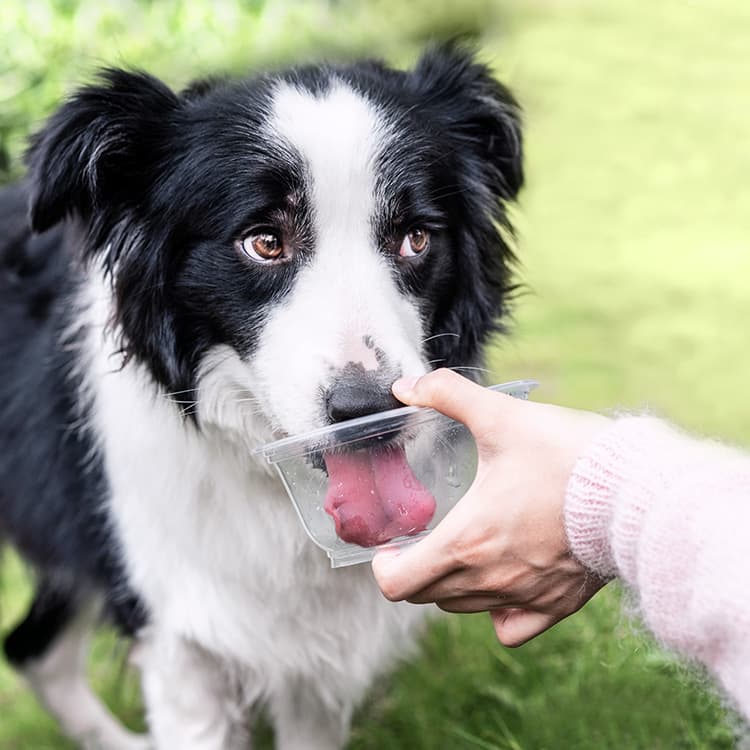
Manu Padilla / Stocksy
Most of us are well aware by now of the importance of staying hydrated — in fact, it’s not uncommon to see a motivational message on our actual water bottles, encouraging us to “Keep chugging!” and “Never give up” for the sake of achieving our recommended daily intake. But with all their sizes, shapes, and energy levels, it’s not so easy to generalize how much H20 our dogs should be getting. Exactly how much should our pups be drinking?
Don’t stress; we’re here to make it easy for you to determine how much water your dog should drink in a day. That way, you can ensure they’re staying hydrated, recognize when they’re drinking too much, and know how to encourage more avid drinking.
Though it may seem like a dog’s body composition is 90 percent fur, water actually makes up 60 to 75 percent of their body mass. It’s necessary for nearly every bodily function, from digesting food to regulating body temperature (and much more). Needless to say, it’s important for your pup to drink plenty of water.
Although every dog is different in their hydration needs, in general, dogs need around one ounce of water per pound of body weight every day. Keep in mind that, pound-for-pound, an always-on-the-go Border Collie, for instance, will likely lap more than the purse-warmer Chihuahua. Age matters, too; puppies will probably slurp more water than a golden-years senior dog.
As with humans, weather can also play a role, with dogs seeking out the water bowl during high temperatures and low humidity more frequently than when it’s cool and rainy. The type of food that they eat can also play a role. Dogs who primarily eat dry food will seek out more water, as wet food already contains moisture.
Body Weight in Pounds | Water in Cups |
|---|---|
Under 10 | 1 to 1 1/2 cups |
10-30 | 1 1/8 to 3 3/4 cups |
30-60 | 3 3/4 to 7 1/2 cups |
60-100 | 7 1/2 to 12 1/2 cups |
Over 100 | 12 1/2 cups or more |
Most of your focus will likely be on making sure your dog is drinking enough water, but there can be times when they start drinking too much. It will seem like the water bowl is always empty and your dog is still begging for more. This increase in water consumption, known as polydipsia, is often caused by health issues.
A variety of ailments — including diabetes, Cushing’s disease, kidney disease, or an infection — may increase a dog’s water intake, as they attempt to right some kind of imbalance in their body. Some medications may also increase drinking (especially steroids). Meanwhile, weather, diet, and activity level can also be to blame.
Although drinking more water may seem like a good thing, drinking too much can actually lead to water intoxication, a potentially serious condition that can affect electrolyte balance and even cause swelling of the brain.
Save some for later, my dude!
There is a middle road when it comes to water consumption in dogs. You don’t want too much or too little. Too little water can lead to dehydration, which can get dangerous quickly. Without proper hydration, organs, joints, and muscles can suffer. A pup can even have trouble regulating their body temperature. Here’s what dehydration may look like:
Gums that are dry and tacky, instead of wet and slippery
Thick, ropey saliva
Constipation issues
Loss of skin elasticity (failing to immediately snap back when grabbed on, say, the back of the neck)
Sunken eyes
Dry nose
Lethargy
If you notice any of these signs or just think that your dog is dehydrated, see your vet as soon as possible.
Maintaining your dog’s healthy water intake should seem easy — just let them drink whenever there’s water — but it isn’t that simple. Yes, you should keep a constant supply of clean water available, but you don’t want them just drinking anything anywhere. For instance, letting your dog use public water bowls is the equivalent of licking the handle of a shopping cart, as far as germs go. Also, puddles and other sources of stagnant water can be a source of giardia. Natural bodies of water can also contain harmful toxins, such as blue-green algae.
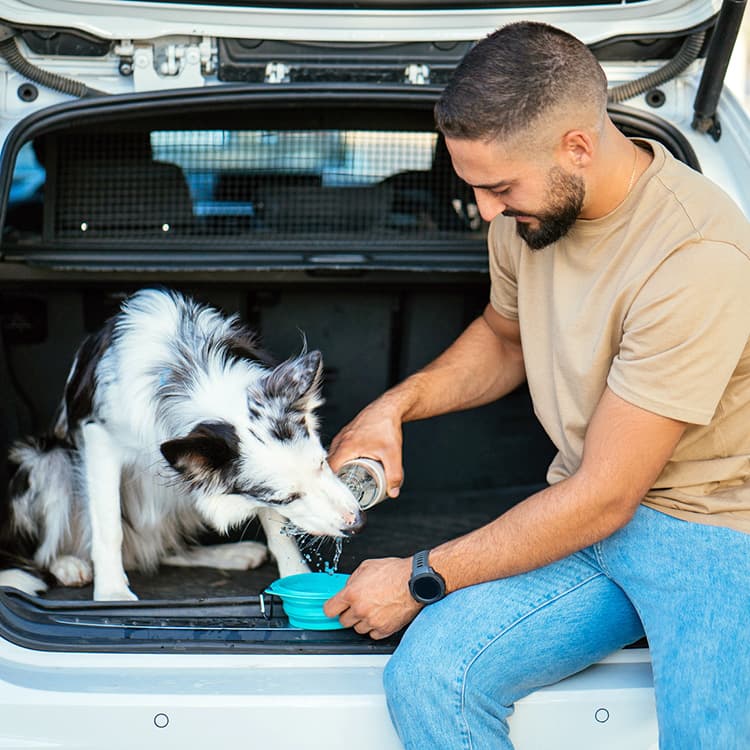
Instead of letting your dog sample these potentially unsavory water supplies, bring your own water. Get a water bottle with a pup cup, or bring a collapsible bowl on all outings. And keep fresh, clean water sources available inside and outside your home.
If your dog is a dainty drinker, consider a water fountain with a filter that will not only clean their drinking water, but provide a source of entertainment and curiosity that may encourage them to drink more.
For chronic, itchy skin or bouts of diarrhea, making sure your dog stays hydrated is even more important. In addition to giving them clean water, feeding them moist or canned foods can up their fluid intake, as can adding a tiny bit of no-sodium broth to that food.
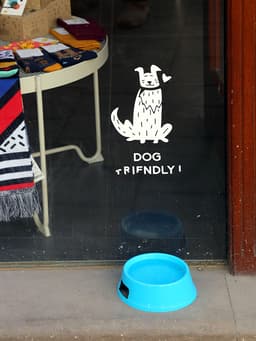
A good basic rule: It’s best to bring your own water.
The amount of water that your dog drinks should be a constant topic with your vet. Discussed this at every visit just to make sure things are going smoothly. You’ll also want to reach out to your vet any time your dog’s water intake seems abnormal. In these cases, take note of any other symptoms you’re noticing, and how long ago you spotted this change.
Dogs should drink roughly one ounce of water per pound of their body weight, daily.
This may vary based on activity level and weather.
Make note of any changes in water consumption, whether more or less, and contact your vet.
As a rule of thumb, if water is safe for you to drink, it’s probably safe for your dog to drink, too.
Water bowls should be cleaned at least daily. You’ll want to dump any leftover water and clean the bowl with soap and water. If your dog is a messy eater who often leaves food bits behind, you may have to clean it more frequently.
Generally speaking, restricting your dog’s water is never a good idea. But if you’re having trouble with nighttime accidents, removing the water bowl about an hour before bedtime may help. Just ensure that your dog is getting their fill of water throughout the rest of the day.
As a body ages, it becomes less efficient at many things, including maintaining a healthy fluid balance. Because of this, your senior pup may need more water, so be sure to offer many sources of fresh, clean water and encourage drinking throughout the day.
Coughing after drinking is often a result of overzealous slurping. Some dogs eat and drink at such a pace that their body can’t help but react. Coughing or gagging can mean that your dog is drinking too quickly, and some water went down the wrong pipe. It can also be due to other health issues, so if your dog is frequently coughing after drinking water, see your veterinarian.
Hatcher, Jo, Cert IV VN, TAE, DipVN, AVN; C. Harvey Stevenson; M. Oleary. “Fluid Therapy-The Essentials.” World Small Animal Veterinary Association Congress Proceedings. Veterinary Information Network. 2018. https://www.vin.com/apputil/content/defaultadv1.aspx?pId=22915&catId=124646&id=8896578.
“How Much Water Should You Drink?” Harvard Health Publishing, Harvard Medical School. 22 May 2023. https://www.health.harvard.edu/staying-healthy/how-much-water-should-you-drink.
“Signs of Dehydration in Dogs & What You Should Do.” Northeast Veterinary Referral Hospital. https://www.northeast-vet.com/site/pet-care-blog-plains-vet/2021/01/25/dehydration-in-dogs-causes-symptoms-treatment.
“Why is my Dog or Cat Drinking so Much Water?” Calder Vets. https://www.caldervets.co.uk/pet-help-advice/general-pet-advice/pet-health/110-why-is-my-dog-or-cat-drinking-so-much-water.

Dr. Chyrle Bonk has been a mixed-animal veterinarian since 2010, with a special interest in rehabilitation. When she's not practicing or writing about veterinary medicine, you may find her exploring the outdoors with her family or tending to her cows, horses, chickens, or cats and dogs.
Pet Wellness
Pet Wellness
Pet Wellness
Pet Wellness
Understand their problem, and make an informed health decision.
Nutrition
Spoiler alert: It’s not necessarily good for your dehydrated dog.